
It’s 2026, and if you’ve spent any time in the ever-expanding Fortnite universe lately, you’ve probably noticed that the blocky survival mode we all called LEGO Fortnite has a new name—and a whole lot more to do. Back in December 2024, Epic Games decided to shake things up in a big way. They didn’t just drop a patch or tweak a few numbers. They rebranded the entire experience into LEGO Fortnite Odyssey, rolled out a massive Storm Chasers update, and even introduced a social spinoff called Brick Life. Looking back now, that moment wasn’t just a name change. It was the beginning of a new era for one of Fortnite’s most creative modes.
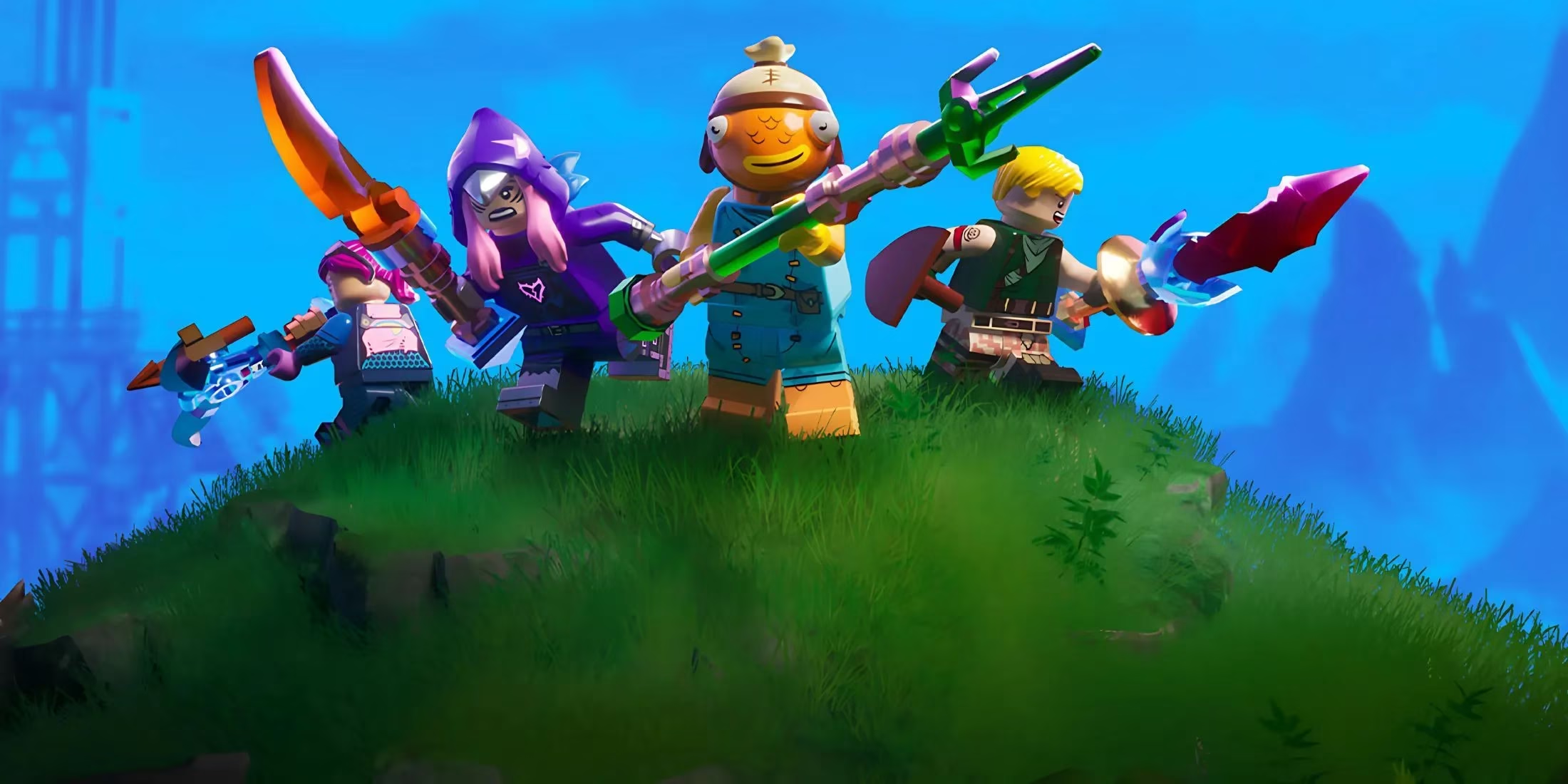
Why such a dramatic shift? LEGO Fortnite had been around for about a year at that point, launched alongside Fortnite Festival and Rocket Racing as part of Epic’s grand plan to turn Fortnite into a metaverse-style platform. The mode had charm—who could resist building cozy villages with blocky versions of their favorite skins? But players were hungry for more direction. More danger. More reason to venture beyond their walls. Epic heard those calls, and the Storm Chasers update was their answer.
What Changed in LEGO Fortnite Odyssey?
The rebrand came with a narrative punch. Players suddenly had a purpose: find the Storm Chasers Village, meet new characters, and uncover the mystery behind the storms that were ravaging the land. The world felt alive with threat. Storm clouds roiled over fresh zones on the map, lightning crackled down without mercy, and beneath them lurked dungeons stuffed with villains nobody had ever seen before.
But that’s not all. The update wasn’t just a cosmetic rename—it overhauled everything from combat to crafting. Here’s a quick look at the most important gameplay upgrades that dropped with Odyssey:
- 🗡️ Combat & Movement
Melee attacks gained extra range, jump height got a little boost, and stamina drained slower while sprinting or swimming. Even the inventory got bigger. Suddenly, surviving felt more fluid and less like a chore.
- ❄️ Temperature Rework
You no longer took constant damage from cold or warm environments. Only extreme freezing or burning would hurt you, making exploration far less punishing.
- 🩹 Slurp Launcher
A brand-new tool let players heal themselves and teammates from a distance. Perfect for those chaotic dungeon runs.
- ⚡ Storm Zones & Bosses
The heart of the update. Storm-shrouded areas demanded careful navigation—dodge the lightning or get zapped. Inside, players faced Raven and the mighty Storm King, two bosses that could end a run in seconds. Better yet, after clearing a storm, the area became safe for 24 hours, then reset with fresh challenges and rewards. Repeatable endgame? Yes, please.
- 🔮 Storm Fruit, Smoothies, and Runes
Consuming Storm Fruit or Storm Smoothies extended your time inside the storms before being teleported out. New Storm Runes, found in special tomes, added build-defining buffs.
- 🌍 Quality of Life
Caves and bus stations appeared on the minimap from farther away. Stations could be used in the rain. More map markers guided your journey. Inventory stack sizes jumped to 80, and storage chests got cheaper to craft. Metal Plates were introduced as a crafting material from any metal ore.
- 🐊 Enemy Balancing
Tougher foes started showing up as you progressed, but brutes traded some damage for more health. Expert and Cozy worlds both got difficulty adjustments, and Storm Wild enemies hit less hard. Threat Indicators also appeared above enemies way above your power level, so you’d know when to run.
- 🚤 Vehicles & Building
Simple, Powered, and Steerable Wheels became lighter, improving buoyancy on water. Soil Plots were added, made from snow and sand, and coconut/banana trees began dropping wood.
- 🐞 Bug Fixes & Polish
Server crashes in caves, NPC spawns underground, desync with flying vehicles—all tackled. Many building pieces got clearer names, and prefab unlocks were fixed in Survival worlds.
You might be thinking: “That’s a lot of changes to drop all at once.” And you’d be right. Epic wasn’t just tinkering; they were resetting the entire experience. One Shot Protection got reworked to be more forgiving. Village upgrade and job rewards were streamlined. Chest loot now scaled better with your progress. Even starting health on new worlds went from three hearts to five. It was a total rethink of the early game too.
But what really kept players coming back—then and now—was the blend of permanence and renewal. The storm zones, the dungeons, the bosses: they all respawned after a day, but your base, your village, your hard-won resources stayed. Odyssey turned LEGO Fortnite into a living world where every session could offer a new thrill, yet nothing felt wasted.
And let’s not forget Brick Life. Announced the very same day as Storm Chasers, this social experience let players hang out, design spaces, and just vibe in a low-stakes LEGO city. It gave Odyssey a lighter companion mode, proving Epic understood that not everyone wanted to fight Storm Kings all the time.
The Bigger Picture
Looking at LEGO Fortnite Odyssey from a 2026 perspective, it’s clear that the rebrand was more than a marketing gimmick. It was a statement. Epic showed they were willing to fundamentally redesign their experiments, not just abandon them. The mode’s player counts surged post-update, and the steady stream of content that followed—new vehicles, crossover events, and even full biome overhauls—kept the adventure feeling fresh.
So, what’s next for Odyssey? Only Epic knows, but if the past two years are any indication, we can expect more bold swings. More storms. More kings to topple. Maybe even a crossover that puts Darth Vader next to a minifig Peely. The only sure thing: the blocky world of Odyssey still has plenty of room to grow. And isn’t that what a great survival game is all about?