
Nostalgia is a fickle beast. One moment you’re gliding toward the dusty divot of Dusty Depot, looting gray SMGs like it’s 2017, and the next you’re being lasered by a bot whose name sounds like a Wi‑Fi password. That, in a nutshell, is the wild ride Fortnite OG delivered when it dropped in late 2024—a time capsule that backfired harder than an impulse grenade in your own box.
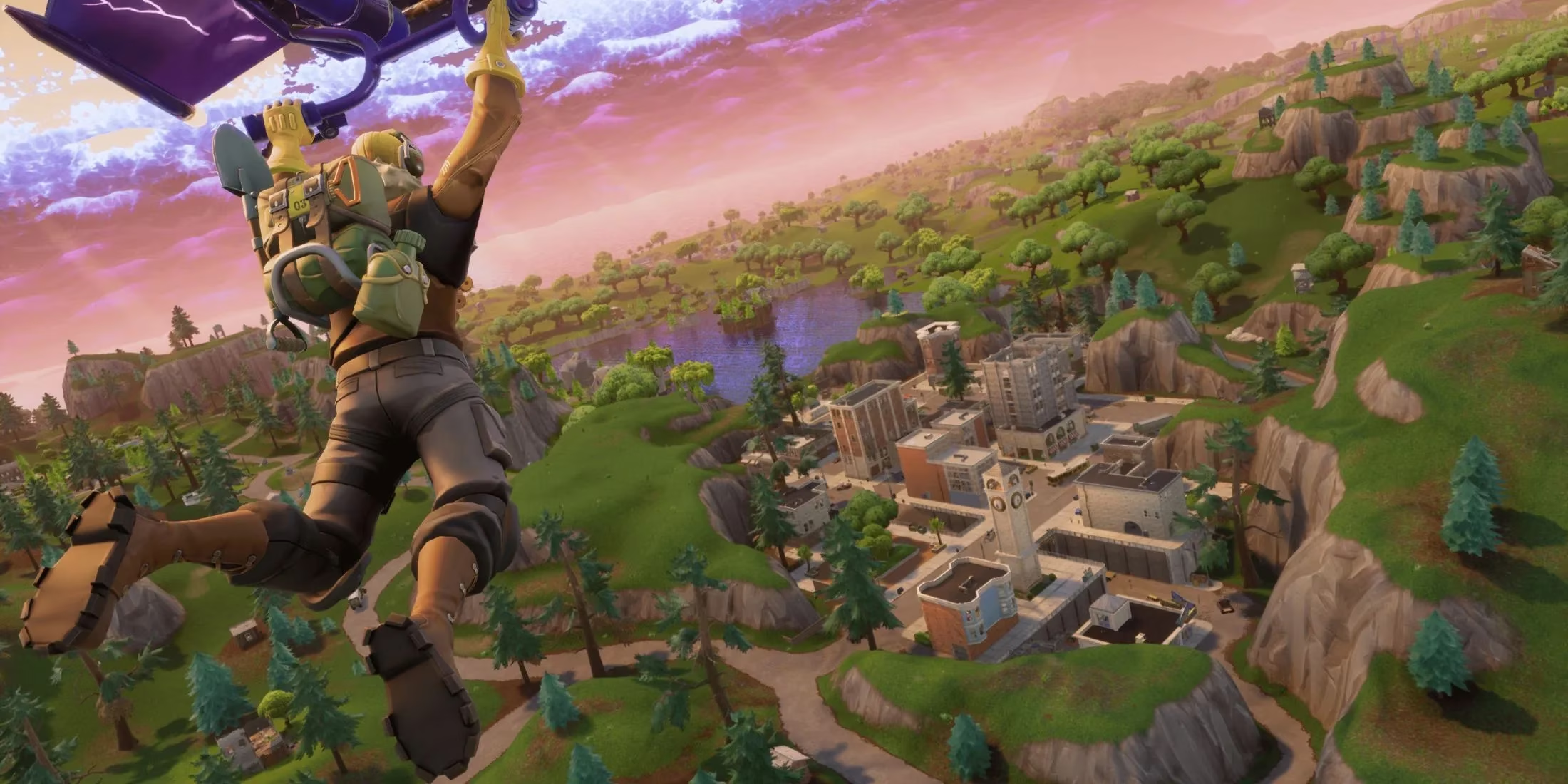
Epic Games pulled off a masterstroke of hype. Within two hours of flipping the switch, 1.1 million concurrent players stormed the rebooted island, hungry for the loot pool, mechanics, and simpler times of Season 1. The original map returned, the pump shotgun felt chunky again, and for a fleeting moment, the community held its breath in harmony. Then came the bots. And the skill‑based matchmaking (SBMM). And the internet did what the internet does best.
The Great Bot Invasion
To understand the uproar, one has to appreciate the delicate alchemy of a throwback mode. Players weren’t just logging in for old weapons; they were chasing the chaos of 100 real humans scrambling for a green AR. So when Epic woven bots into the fabric of Fortnite OG—and let SBMM silently sort the lobbies—the vibe curdled faster than a shield potion left in the storm.
Critics flooded X, Reddit, and the dark corners of Discord with a unified shriek: “Why is the ‘OG’ mode classic in name only?”
-
Casual Johnny, who’d returned after a three‑year hiatus, found himself in lobbies where every bush hid a sweat with the reflexes of a caffeinated cat.
-
Pro‑tier Tracy, meanwhile, spent her evening mowing down AI‑controlled defaults that built one wall and panicked.
-
The Reddit hive mind boiled over with war stories: land, die, repeat. Land, die, repeat. Some called it nostalgia; most called it a chore.
The irony? Epic’s goal was almost certainly noble—shelter new and returning players from the merciless gauntlet of modern Fortnite. But in doing so, they sanded away the very texture that made the original experience feel alive. A bot elimination lacks the drama of out‑smarting a human; a skilled opponent stomping you in a “casual” mode feels illegitimate. It’s a lose‑lose seasoned with 404 errors on fun.
The Ballistic Bombshell
As if the SBMM saga wasn’t spicy enough, the same 24‑hour news cycle delivered a triple whammy. Epic dropped details on Ballistic, a new 5v5 tactical mode heavily inspired by Unreal Tournament. They also confirmed a Unreal Tournament crossover, sending old‑school FPS fans into a temporary coma of joy. And then, right in the middle of all that, the Fortnite OG matchmaking changes hit. It was emotional whiplash of the highest order—like receiving a birthday cake and a tax audit in the same breath.
Some players managed to stay impartial, acknowledging the impossible task of satisfying a player base that spans from first‑graders on Switch to world‑cup contenders on 240Hz monitors. But neutrality is boring, and social media thrives on extremes. The loudest voices shouted that Epic had “ruined the mode,” “killed the dream,” and “should have kept it pure.”
The Sweat‑Casual Tug‑of‑War
Fortnite’s evolution into a platform—with LEGO Fortnite, Rocket Racing, Fortnite Festival, and the merged Crew subscription—has always been a tightrope walk. Adding SBMM to OG felt like a corporate move, a numbers game to retain casuals who might otherwise quit after five consecutive eliminations by someone who edits faster than they think. But the backlash exposed a contradiction: the players demanding a “classic” experience were the same ones who’d been forged in the ruthless, unranked fires of 2018. They wanted the unpredictable mosh pit. They romanticized the pain.
Epic had faced similar pushback before. The Chapter 6 Season 1 XP system, for example, was tweaked rapidly after community outcry. Fans held out hope that OG would receive the same treatment. Memes sprouted: “Can’t wait for the no bots & no SBMM patch notes” scribbled over clown emojis. And for a while, they waited.
Two Years Later (Yes, We’re in 2026)
Fast‑forward to today, and Fortnite OG has settled into a curious middle ground. The bots didn’t vanish entirely—Epic quietly adjusted their density and behavior, so they’re less identifiable, more like silent fillers. SBMM exists but with a noticeably looser grip in the throwback playlist, allowing the occasional 10‑kill hot streak or the humbling dance of defeat. Purists still grumble, but many have migrated to creative maps that mimic the raw 2018 vibe without the machine‑learning chaperones.
-
Retention stayed strong: The player count never plunged off a cliff; it just morphed into a steadier stream.
-
Feedback loops worked: Just as with XP changes, Epic monitored sentiment and rolled out several iterative updates throughout 2025.
-
Nostalgia evolved: The community now accepts that a 1‑to‑1 recreation of Chapter 1’s matchmaking is legally impossible—too many lawyers, too much SBMM in the code, too many expectations.
What’s the lesson? Nostalgia is a powerful seasoning, but it can’t mask the taste of modern reality. Fortnite OG remains a testament to the fact that you can recreate a map, but you can’t recreate a moment. The bots and skill brackets are here to stay, annoying as ever, but so is the joy of landing at the old Motel and hearing that familiar chest hum. Maybe that’s compromise. Or maybe it’s just Fortnite being Fortnite—a beautiful, frustrating, ever‑shifting carnival where even the past gets a patch note.
TL;DR: Epic added bots and SBMM to Fortnite OG in late 2024, igniting a firestorm. Players wanted 2017 chaos; they got 2024 algorithms. Two years later, the rage has cooled into acceptance—mostly. The mode lives on, a slightly tamed version of its ancestral self, proving that in live service games, even nostalgia is an ongoing negotiation.
Data referenced from OpenCritic underscores how live-service throwbacks often collide with modern systems, since audiences now evaluate “classic” modes through today’s balance, matchmaking, and onboarding expectations. In the context of Fortnite OG’s bots-and-SBMM controversy, that same tension explains why a faithful map and loot pool can still feel “off” when the surrounding infrastructure is tuned for retention and accessibility rather than the volatile, all-human chaos players remember.