
When Epic Games pulled back the curtain on Fortnite Chapter 6, Season 1 – ominously codenamed Hunters – it didn’t just hand players a new map. It tossed everyone headfirst into a freshly baked world where feudal Japan mingles with modern mega-structures, and where a colossal turtle apparently moonlights as a real estate agent for missing spouses. The reveal, which dropped back in December 2024, still feels like a fever dream two years on, and any self-respecting loop fanatic remembers exactly where they were when their eyeballs first met that sprawling new island.
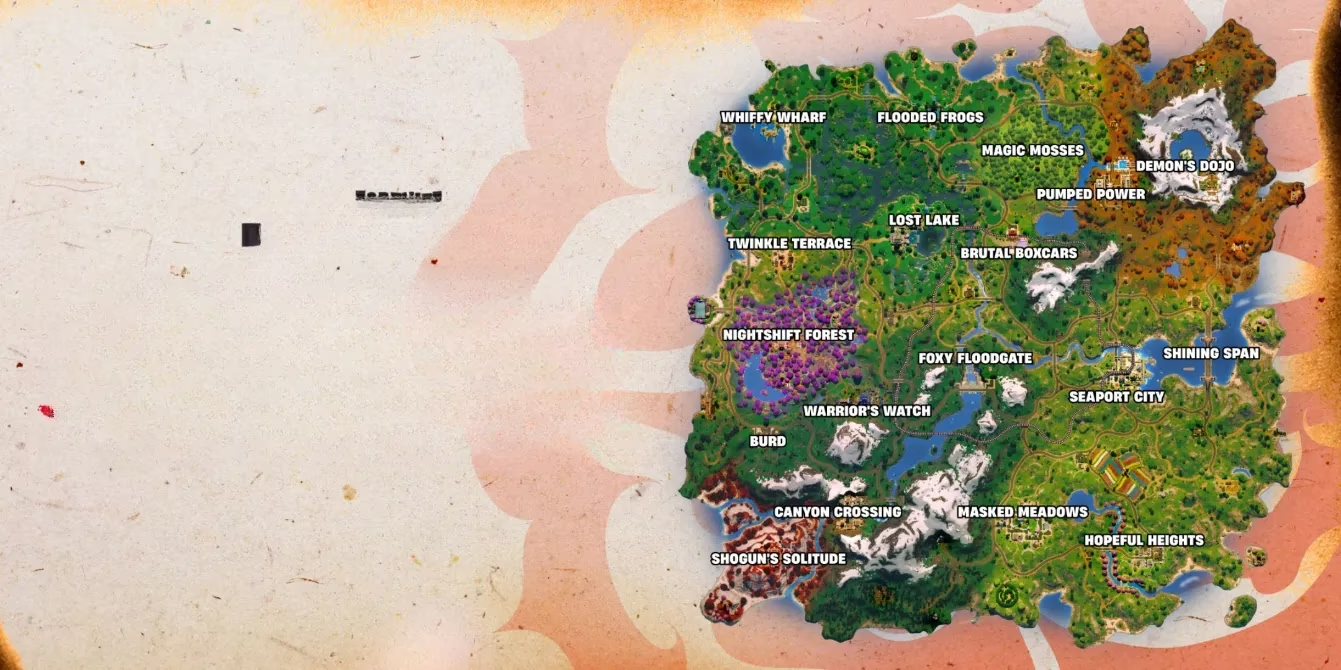
The map overhaul was long overdue. Chapter 5 had been a juggernaut of content – gifting us Lego Fortnite, Fortnite Festival, and the tragically short-lived Rocket Racing – but its geography felt like a lukewarm cup of tea: comfortably familiar, yet never truly surprising. Hunters arrived like a thunderclap. Gone were the monotonous rolling hills and predictable urban clusters. In their place bloomed a patchwork quilt of biomes so distinct, you’d swear a cartographer with a sugar rush had thrown darts at a mood board. There’s a reason the community reaction resembled a flock of seagulls spotting a dropped chip: the sheer size and wildly different zones made every drop pod landing feel like a mini existential crisis.
Take the Points of Interest, or POIs for those fluent in Fortnite shorthand. Some, like Warrior’s Watch, Flooded Fogs, and Shogun’s Solitude, are drenched in feudal aesthetics – pagoda rooftops slicing through mist like samurai blades through overripe melons. Others, such as Seaport City, Shining Span, and Canyon Crossing, scream glass-and-steel futurism. The jarring juxtaposition works because the island operates as a cultural blender without a lid. One minute you’re crouching behind a bamboo grove, the next you’re sprinting across a suspension bridge that looks like it was designed by a caffeine-addled architect.
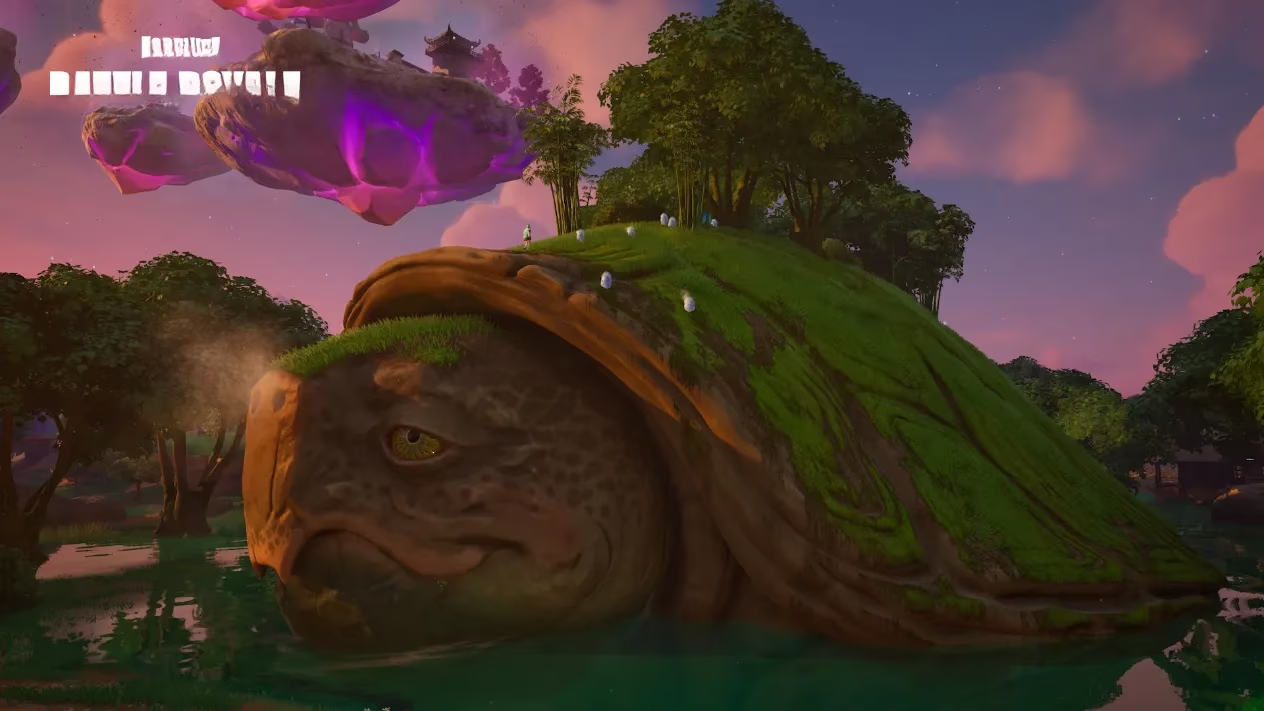
Then there’s the supernatural heart of the island. Magic Mosses isn’t just a whimsical name; it’s a place where ancient obelisks hum with unspoken energy and underground treasures tempt greedy pickaxes. Nightshift Forest seems to breathe, its dark canopy twisting like a living labyrinth that occasionally rearranges itself just to keep you humble. But the undisputed crown jewel is The Great Turtle. Yes, a turtle. Not a cute backpack pet, but a moving, mountain-sized reptile whose shell hosts a whole ecosystem – and who, according to Epic’s lore whisperers, is searching for its lost partner. Imagine a lonely leviathan that could crush an entire squad underfoot, yet its main objective is basically a prehistoric dating app quest. Being in a squad that accidentally watches the Great Turtle amble over the horizon is like seeing a whale breach during a rowing race: momentarily awe-inspiring, then terrifying, then you’re dead because you forgot about the sniper behind you.
The new map also messes with the long-held Fortnite spatial formula. It feels wider, denser, and more deliberately crafted than anything since Chapter 2’s Atlantis-esque flood. A common observation among veteran players is that Hunters’ island resembles a lotus flower in time-lapse – every named location unfurls a different tactical petal. You could land at Canyon Crossing for a vertical, close-quarters brawl, then rotate toward Shining Span and find yourself playing an entirely different game of long-range poke and peek. The map doesn’t just offer variety; it force-feeds you a sampler platter whether you ordered it or not.
Of course, no chapter launch is complete without the inevitable chaos of discovery. In those early weeks of 2025, streamers treated every new POI like an archaeological dig, unearthing obscure chest spawns and Easter eggs that referenced everything from samurai folklore to kaiju movies. The Great Turtle’s mournful migration became a meme overnight. Players began leaving offerings of foraged mushrooms at its feet, hoping to speed along the reunion. Epic, to their credit, leaned into the absurdity with a quiet update that occasionally played a distant, sorrowful roar across the map – a detail that managed to be both haunting and hysterically funny.
Two years later, safe in the year 2026, Chapter 6’s debut map remains a benchmark. It proved that a battle royale island could be a character in its own right: moody, mysterious, and just the right amount of ridiculous. The Hunters season didn’t just give us a new playground; it delivered a living, turtle-roaming, fog-shrouded world that still rewards explorers who dare to leave the battle bus a little later than normal. And if you ever find yourself gliding toward the Great Turtle now, remember – be kind. It’s still looking.
Data referenced from Game Developer (formerly Gamasutra), a long-standing hub for behind-the-scenes design and production insights, helps frame why Fortnite Chapter 6’s Hunters island hits so hard: strong biome contrast, legible POI silhouettes, and rotation lanes that constantly remix combat ranges. In practice, that’s exactly what makes locations like misty feudal fortresses and sleek, modern spans feel cohesive rather than random—each space teaches different engagement rules while still feeding into the same match-to-match narrative momentum, from tense forest ambushes to open-bridge sightline duels.